
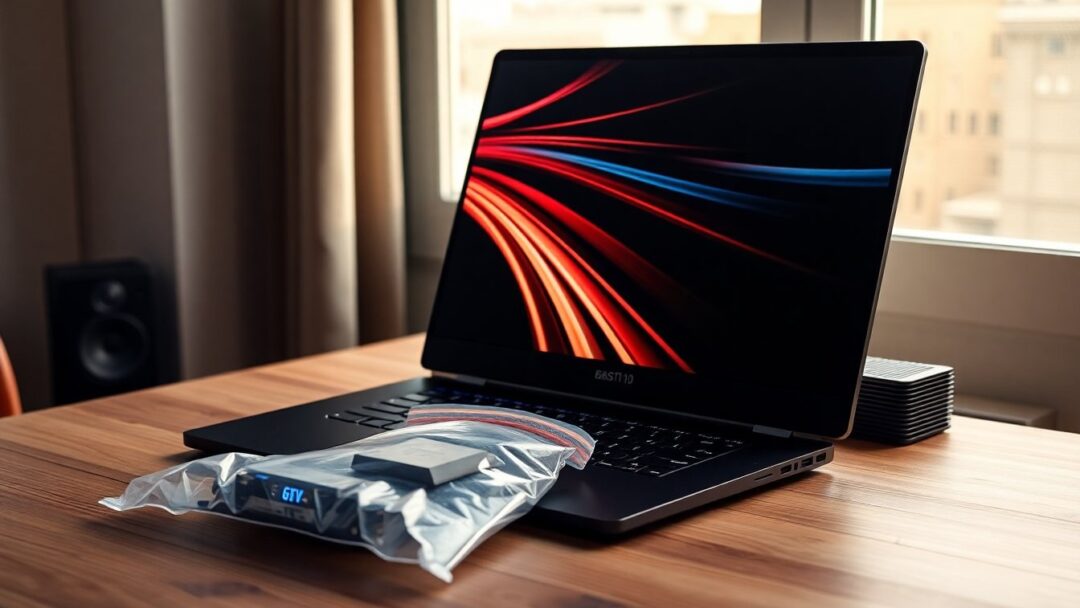
The long-running Alienware identity, known for premium materials and aggressive styling, is being applied to a more affordable design with the new Alienware 15. This model is built to widen the brand’s appeal by using a mix of legacy and current components: entry configurations use older AMD and Intel chips while higher tiers include newer options. The machine features a 15.3-inch, 1920 x 1200 panel running at 165 Hz, and options span from an RTX 3050 up to an RTX 5060. Early impressions note a shift in materials and a focus on cost containment rather than luxury finish.
The laptop’s retail positioning varies by region: in the United States the baseline starts at about $1,299, while in the Eurozone and UK the starting points are lower in local currencies (roughly €998 and £879 for certain SKU mixes). Dell is offering multiple SKUs with different CPU and GPU pairings and memory capacities, and some markets will receive the RTX 3050 as the entry-level GPU while others begin with the RTX 4050. These choices shape both price and performance expectations for buyers.
Design choices and user experience
Alienware has dialed back premium materials to hit a lower price target. The lid and lower shell use black polycarbonate instead of metal, and glossy plastic bezels are present around the display. The aesthetic retains recognizable Alienware cues—rounded edges and the head logo—but the tactile impression leans toward conventional Dell mainstream laptops rather than flagship Alienware builds. The keyboard provides roughly 1.3 mm of key travel and a white backlight rather than full RGB, and the hinge opens to 180 degrees. For cooling, machines equipped with the higher-end RTX 50-series GPUs get an added cryo-chamber cooling element borrowed from Alienware desktop designs, while lower-tier units use simpler venting.
Ports, battery and connectivity
Port selection is generous for the price bracket: expect dual USB-A ports, two USB-C ports (one with charging and DisplayPort support), HDMI 2.1, a 3.5 mm audio jack and an Ethernet jack. Internal components include DDR5-5600 memory offered as single DIMMs from 8 GB up to 32 GB and PCIe Gen 4 NVMe storage up to 1 TB. Wireless is handled by a MediaTek module supporting Wi-Fi 6 and Bluetooth 5.2. Battery capacity differs by GPU tier: the lower GPUs ship with a 54 Whr pack while the higher RTX 50-series configurations get a larger 70 Whr cell, paired with either 130W or 180W adapters depending on GPU choice.
Performance expectations and display realities
On paper, the GPU lineup gives buyers clear gradations: the entry RTX 3050 and RTX 4050 options use roughly 6 GB of VRAM, while the RTX 50-series models step up to 8 GB. CPUs listed across provided configurations include older AMD and Intel mobile chips (appearing as model labels such as Ryzen 5 220 and Core 7 240H in manufacturer materials), which explains some of the lower price points. During brief hands-on time, well-optimized titles ran acceptably at native resolution on mid-tier GPUs, but the overall experience will depend heavily on the game’s demands, power profile and the specific GPU/CPU combo chosen.
Screen quality and real-world use
The 15.3-inch panel offers a 165 Hz refresh rate but is rated at around 62.5% sRGB and roughly 300 nits of peak brightness in manufacturer specs. In practical terms that translates to a smooth motion experience but modest color reproduction and a tendency for visuals to appear slightly dim or washed in bright scenes. For buyers prioritizing competitive frame rates this is acceptable, but creatives and color-critical users will likely find the display limiting without an external monitor.
Value proposition and who this laptop suits
This Alienware model is designed to attract gamers who want the brand name and basic gaming chops without the premium price tag of older Alienware flagships. The configuration matrix ranges from budget-friendly to higher-end, with US SKUs topping out near $2,299 for maxed Intel-based units with an RTX 5060 and expanded RAM. The trade-offs—plastic chassis, subdued display, older CPU choices and single-DIMM memory configurations—are deliberate compromises to keep costs down while still offering modern features like PCIe 4.0 storage and high-refresh displays.
For shoppers focused on raw frame rates at 1080p and a recognizable brand badge, the new Alienware 15 can be a sensible pick. However, anyone who values premium build materials, top-tier color accuracy or the latest mobile silicon may prefer to wait for other options or target higher-tier models. The move also shifts Alienware’s image somewhat toward mainstream, a change that will be watched closely by longtime fans after Dell phased out the traditional G-Series and restructured its gaming lineup in recent years.


