
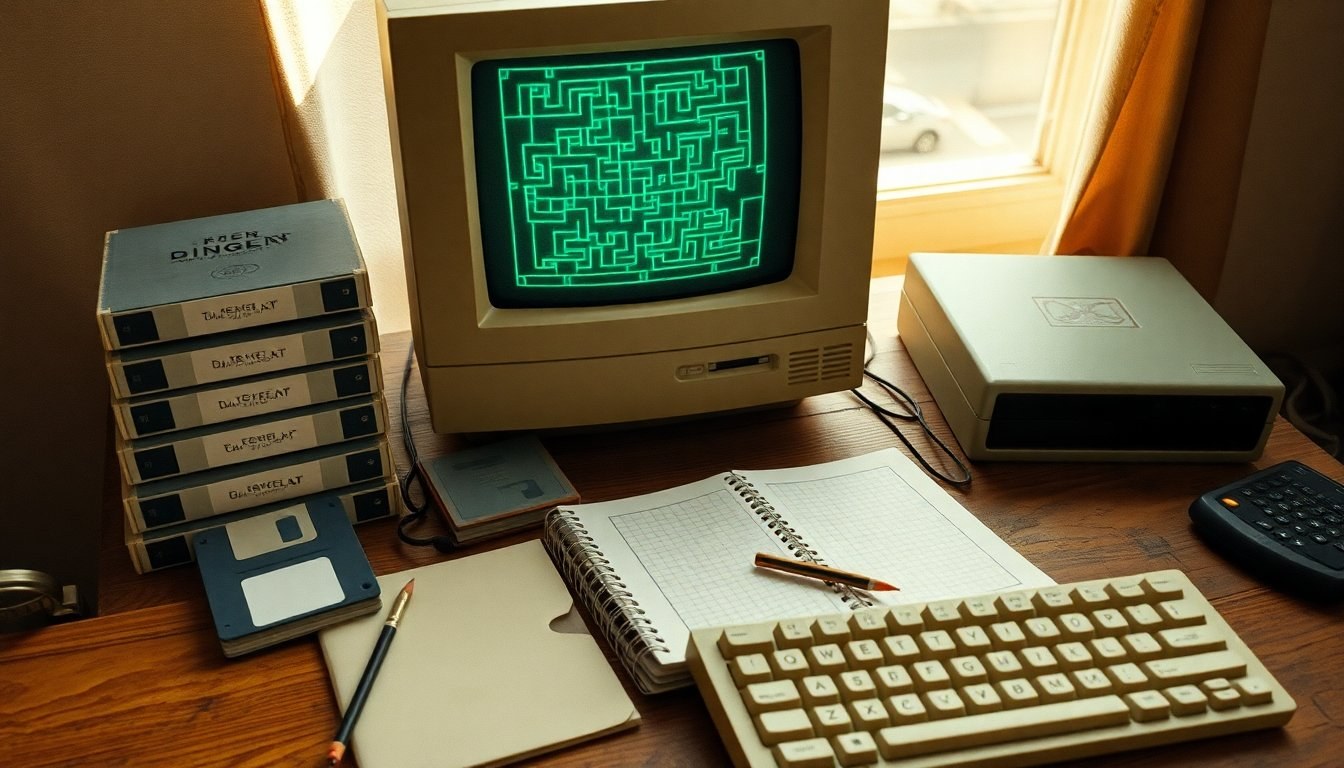
The announcement that Atari has obtained the rights to the first five Wizardry titles marks a notable moment for preservation of early computer role‑playing history. The original Wizardry: Proving Grounds of the Mad Overlord first appeared in September 1981 and established many conventions of party‑based, first‑person dungeon design. For decades much of that early catalog was difficult or impossible to find on modern systems, even as the series shaped later games across the industry. A 2026 remake by Digital Eclipse demonstrated that these early designs can be adapted for today’s audiences without erasing their core identity.
According to reporting, the transfer to Atari from Drecom (the company that held the IP prior to the sale) was completed on May 6, 2026. Atari’s leadership has signaled an intent to republish, remaster, and produce console ports and physical releases for the early Wizardry entries. Those steps would bring legal availability back to collectors and new players alike, and could finally reunite the influential first five games with contemporary storefronts and formats.
The origins and legacy of Wizardry
The Wizardry franchise began as a university project by Andrew C. Greenberg and Robert Woodhead and was originally released on the Apple II. It was one of the first commercially successful attempts to translate tabletop fantasy role‑playing into a home computer experience, and it helped define what many now call the CRPG. The series pioneered the grid‑based, first‑person dungeon crawl—later nicknamed the blobber style—and introduced gameplay systems that influenced numerous later franchises. Elements such as party management, turn‑based combat, and the option for importing characters from one game to the next became fixtures of the genre.
How Wizardry shaped other games
Beyond its U.S. beginnings, Wizardry had a profound cultural impact in Japan, inspiring designers behind titles like Dragon Quest and other classic series. The series also spawned many spin‑offs, sequels and regional adaptations that kept the formula alive long after the original developer reduced activity. Sales milestones documented in historical sources show steady success: the first game sold 24,000 copies by June 1982, and the franchise reached multi‑million sales in later years. That mix of commercial footprint and mechanical innovation explains why modern developers and preservation advocates keep returning to the brand.
What Atari’s acquisition could deliver
With the rights to the early entries, Atari can pursue several paths: straightforward reprints for emulated platforms, fully remastered editions with updated visuals and UI, and new ports that tailor controls to contemporary consoles. The company has specifically mentioned intentions to produce physical releases, which would appeal to collectors and signal a commitment to archival distribution. The 2026 remake of Proving Grounds by Digital Eclipse offers a practical precedent: it reintroduced a 1981 design to modern players while respecting the original’s structure, showing a blueprint for balancing fidelity with accessibility.
Legal and design challenges
The IP trail for Wizardry has been complex—rights were transferred multiple times over the years, including sales to intermediary companies before Drecom and now Atari. Any reissue strategy will have to untangle localization, licensing for platform stores, and the technical work needed to make decades‑old code run cleanly on modern machines. At the same time, there is a clear opportunity: reviving rare titles can reintroduce influential mechanics like prestige classes, deep dungeon design and party progression to a new generation, and can inspire contemporary developers who trace their lineage to these early games.
Looking ahead
The move by Atari is likely to please preservationists and fans eager to see canonical material returned to circulation, while also inviting scrutiny over how faithful remasters will be. Many of the early Wizardry games remain unavailable today, and a coordinated reissue campaign would close a gap in gaming history. Whether the company opts for faithful emulation, modern quality‑of‑life improvements, or a mix of both, the acquisition creates a real chance to ensure these seminal dungeon crawl experiences remain accessible and influential for years to come.


