
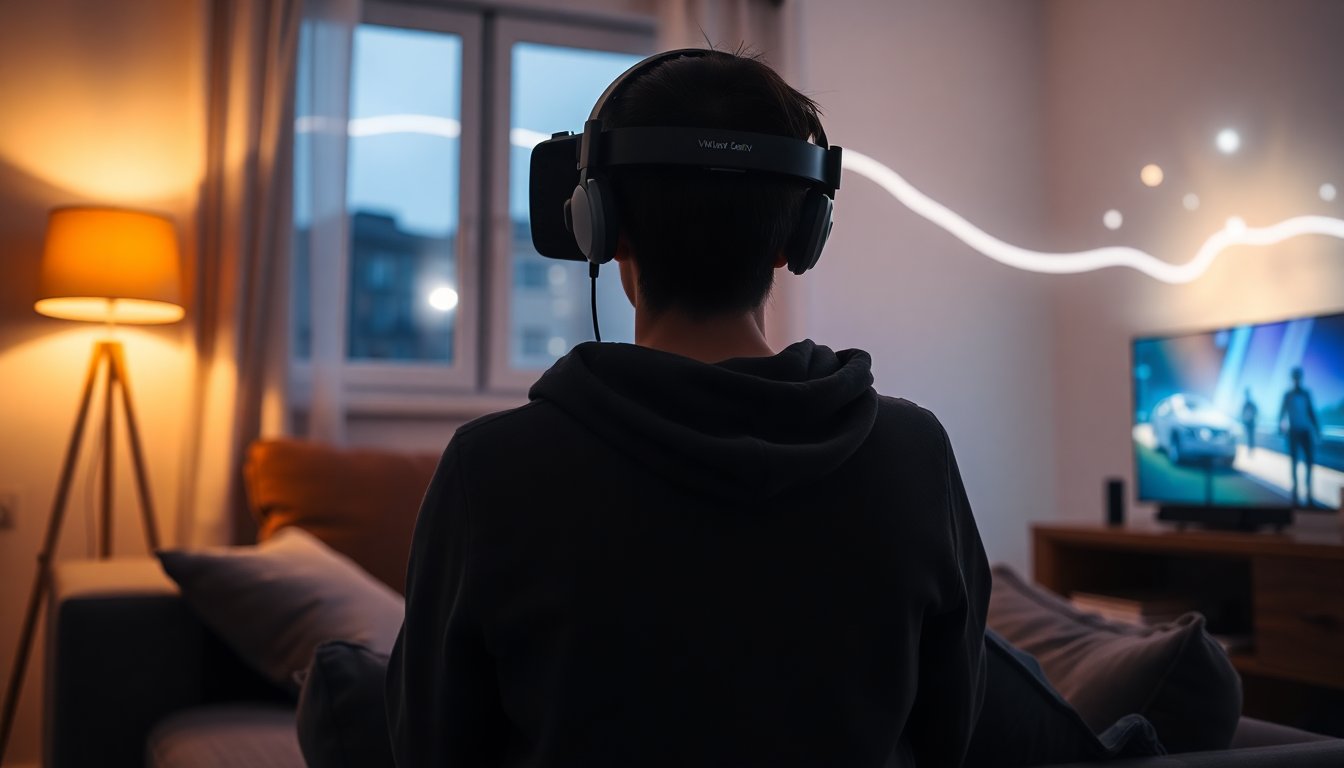
The most recent keynote from Meta confirmed a long-anticipated development: Xbox Cloud Gaming will reach Meta headsets in December. Company leadership, including Mark Zuckerberg, outlined that the new Meta Quest 3 will include built-in support for Microsoft’s cloud streaming service, opening up access to the extensive Xbox Game Pass library. While the announcement kept specifics thin, the core promise is straightforward: subscribers should be able to stream hundreds of titles—many already available through Xbox Game Pass—directly to their Quest hardware. The subscription currently runs about $16.99 per month, a detail that will matter to gamers weighing the new option.
It’s important to note that the experience is not the same as native VR gaming. Instead, streamed titles will run on a virtual display inside the headset rather than being converted into immersive, room-scale VR. Think of this as carrying a personal screen into a headset rather than stepping fully into a game world. That presentation choice follows examples seen on other mixed-reality devices and lets players use their existing libraries without major redevelopment. Expect to see familiar controls, UI layouts, and gameplay translated into a headset-centric viewing mode rather than rebuilt for stereoscopic immersion.
What the integration delivers
The practical takeaway is convenience and breadth: with Xbox Cloud Gaming on Meta hardware, users gain access to a vast catalog without needing a console or gaming PC. The combination of the Meta Quest 3 hardware and Microsoft’s streaming backend aims to lower the barrier for players who want large-screen gaming while mobile or inside a headset. Internal documents that Microsoft once leaked have long suggested a strategy of maximizing reach for cloud services, and this step fits that pattern. For consumers it means one more place to access the same titles, and for developers it extends audience reach without additional ports.
How it will feel on Meta Quest 3
On the gameplay side, the streamed titles will appear on a floating virtual screen inside the Quest environment. That format keeps titles in their original 2D form but places them within a VR context that can feel more immersive than a physical TV. The Meta Quest 3 has been called the “most powerful Meta Quest yet” by Mark Zuckerberg, and Meta says the headset’s improved display and processing will enhance the visual fidelity of streamed games. Pre-orders for the headset start at $499, and the device itself is scheduled to launch on Oct. 10, giving early adopters time to decide on cloud subscriptions ahead of the December rollout.
Limitations and compatibility
Because this is a streaming solution rather than native VR remasters, not every title will feel optimal in the headset. Performance will depend on network conditions and server loads, and some mechanics designed for controllers or non-headset input may be less natural inside a VR session. Expect standard controller mapping and UI scaling rather than full spatial redesigns. The integration also relies on the underlying Xbox Cloud Gaming infrastructure, so latency, bitrate, and resolution will be governed by Microsoft’s servers and your local internet connection. Still, for many players the convenience of accessing a large library without new purchases or ports will outweigh those trade-offs.
Timeline and what to expect next
Meta did not pin down an exact day in December for the cloud launch, only that the feature will arrive that month. Meanwhile, the Meta Quest 3 is available for pre-order now starting at $499, and the headset’s retail release is set for Oct. 10. Players who want to test the cloud option should consider having a Xbox Game Pass subscription ready—currently about $16.99 per month—and a reliable high-speed connection. Over time, expect minor refinements and potential updates to controller schemes or display options as Meta and Microsoft gather feedback from early users.
Industry implications
The rollout reinforces a trend toward platform interoperability and cloud-first distribution: companies are seeking to deliver the same games to more screens with minimal friction. For consumers, that can mean cheaper entry into large libraries and flexible ways to play. For the wider market, the Meta–Microsoft arrangement is a clear signal that cloud services will continue pushing into new form factors. Whether this becomes a dominant way to play or a complementary option, the arrival of Xbox Cloud Gaming on the Meta Quest 3 will be a useful case study in how streamed gaming adapts to mixed-reality hardware.


