
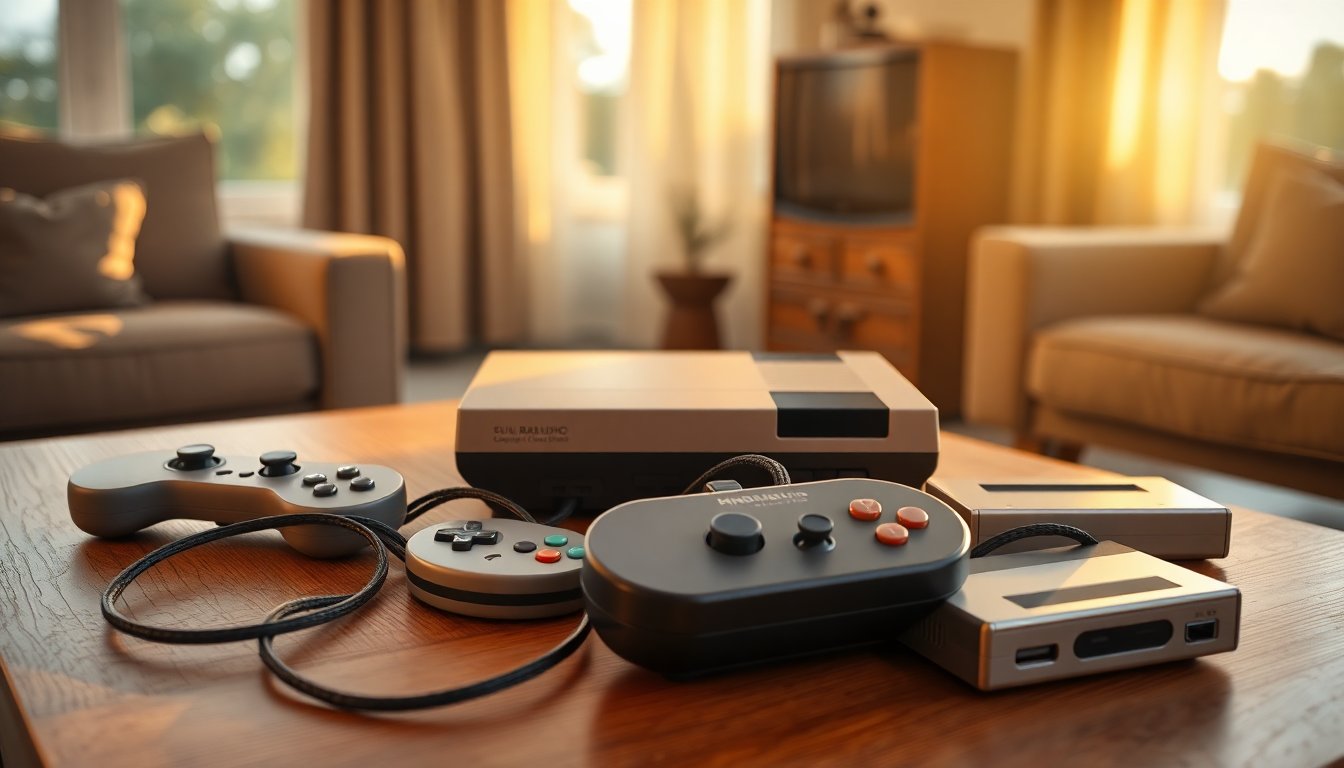
Many players still return to the titles that defined the 1980s and 1990s, and modern devices now let those games shine on contemporary TVs. The appetite for classic games—from 8-bit sprites to early 3D polygons and CD-era soundtracks—remains strong among Gen X and Millennial gamers. Instead of wrestling with outdated wiring, people can choose from a variety of modern platforms that deliver faithful playback, curated libraries, and conveniences like HDMI output and cloud saves. Whether your loyalties lie with the NES, the Sega Genesis, or the original PlayStation, new hardware offers multiple ways to revisit those moments without the friction of old setups.
Editors’ note, April 13, 2026: this guide was updated to include the Analogue 3D, Analogue Duo, Atari The400 Mini, and the Nintendo Switch 2. A number of discontinued models were removed, and the remaining selections were checked for current availability and relevance. The consoles featured here are grouped into three practical categories: modern platforms with extensive classic catalogs, third-party units that accept retro media such as cartridges and CDs, and compact mini game systems ideal for casual play.
Why modern retro consoles matter
Today’s retro-focused hardware does more than reproduce old titles; it simplifies access and improves image quality while respecting the original experience. Modern designs often replace analog outputs with HDMI, add options for pixel-perfect scaling, and include features like save states and customizable display filters. These conveniences let players concentrate on gameplay rather than technical hurdles. Enthusiasts who care about authenticity still have choices: some systems favor faithful reproduction of original behavior, while others present convenience-first emulation and curated libraries. The balance between authenticity and accessibility influences whether a console is best for a collector, a casual player, or someone new to retro gaming.
How the market is organized
The assortment of retro hardware generally falls into three categories. First, there are modern platforms that ship with or provide access to large collections of classic titles and services. Second, third-party systems let you use original media on modern displays—these appeal to collectors who keep cartridges and discs. Third, mini consoles replicate single-system libraries in compact, plug-and-play form. Recent additions to the market reflect this diversity: the guide now lists hardware such as the Analogue 3D and Analogue Duo among third-party and specialty devices, while systems like the Nintendo Switch 2 represent modern consoles offering extensive backward-compatible or reissued collections.
Third-party and media-friendly systems
For players who prize original cartridges and discs, certain third-party consoles and adapters provide a bridge to modern TVs. These solutions eliminate the need to hunt down legacy analog cables or external scalers, placing original media into a contemporary display pipeline. Some manufacturers emphasize hardware-level accuracy and use designs that aim to reproduce original timing and behavior, which appeals to preservation-minded collectors. The updated list highlights options that still circulate in the market and notes models removed when they became unavailable, so buyers can focus on currently supported alternatives.
Mini consoles and modern platforms
Compact plug-and-play units and modern consoles with curated libraries offer low-friction nostalgia. Mini consoles replicate an era’s library in a tiny footprint, often including save states, rewinding, and television-ready outputs. At the other end, current consoles and digital storefronts make entire back catalogs easy to access, sometimes accompanied by online features that expand classic games’ social playability. The inclusion of the Nintendo Switch 2 in the update reflects the trend of mainstream platforms incorporating extensive classic-game support alongside contemporary titles.
Final considerations and choosing the right device
Selecting the best retro console depends on priorities: collectors often favor systems that accept original media and prioritize authentic behavior, while newcomers and casual players may prefer mini systems or modern consoles with curated libraries for convenience. Keep in mind practical factors such as availability, price, and whether a device receives ongoing support or firmware updates. This guide’s selections were refreshed on April 13, 2026 to include the latest relevant models and to remove items no longer available, helping you focus on options that are both current and accessible.
Quick tips
Look for consoles that match your goals: choose media-compatible hardware if you want to use originals, pick mini systems for instant nostalgia, and opt for modern platforms if you value a wide, digitally accessible catalog. Whatever you decide, modern retro hardware now makes it easy to enjoy those beloved classic games without extra adapters or guesswork.


