
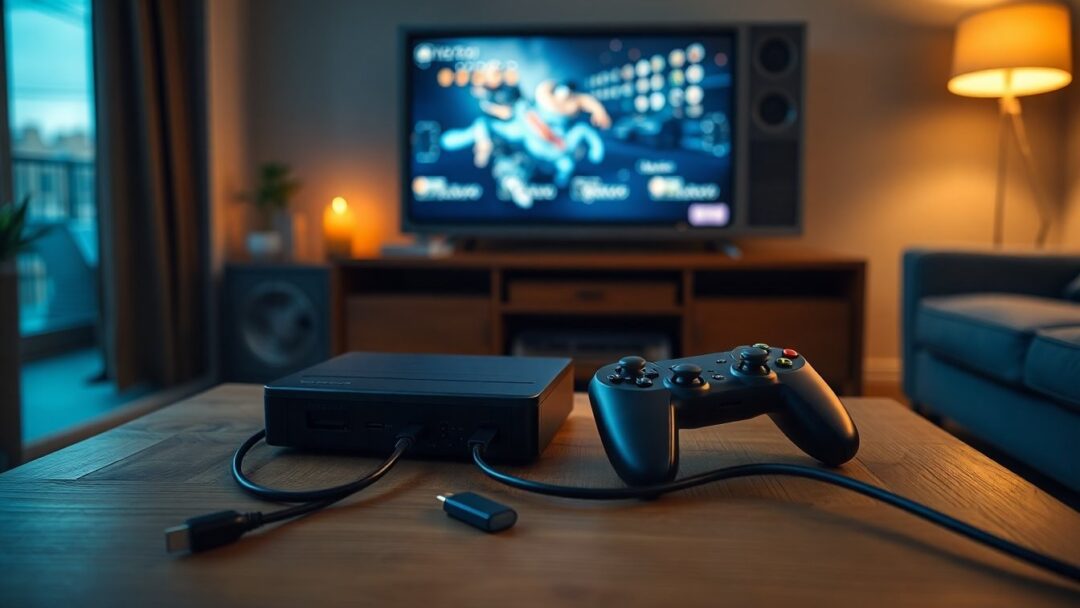
The modern retro console described here is built for instant play and shared moments. With a focus on simplicity, the device arrives preloaded with a large library—over 20,000 games on the base configuration—and uses a 64GB TF card for storage. The unit advertises a 2026 design and integrates multiple emulators so a wide variety of older systems can be accessed without downloads. The setup is intentionally minimal: connect the stick to a TV via HDMI, power with the included USB cable, and the interface appears ready to browse. This approach keeps things local and removes any need for an internet connection to play.
Beyond immediate playability, the console aims to be portable and expandable. The device supports TF card expansion, enabling larger libraries—options in some bundles range up to 128GB with tens of thousands of additional game files. The hardware includes a receiver and two wireless gamepads operating on 2.4 GHz, offering a stable connection up to around 15 meters. Output is optimized for modern displays via HDMI 4K (no composite AV output), so you can use this stick with TVs, monitors, projectors, or even some PC setups for a larger-screen experience.
What’s inside the stick
The core components combine compact storage and multi-platform playback. The package typically ships with a preloaded 64GB TF card containing a substantial catalog of titles; higher-capacity cards are offered for more extensive collections. The system runs on a set of emulators—software that recreates vintage console hardware on modern silicon. An emulator is a software component that mimics old systems, letting classic games run as if on original hardware. The exact emulator list varies by model, but the device advertises broad coverage of popular retro platforms. Performance is set for casual authenticity rather than hardware-perfect reproduction, balancing playability and device cost.
Storage and emulation flexibility
Storage choices matter for collectors and families: a base 64GB setup is convenient for casual users, while 128GB options accommodate far larger libraries—some configurations cite tens of thousands of additional titles when expanded. The stick supports TF card updates, so users can add or swap cards rather than relying on online downloads. Because the system relies on preloaded content and local storage, it remains functional offline, which is useful for travel or privacy-minded households. The trade-off is that emulation accuracy, game organization, and metadata can vary between batches and sellers.
Controls and multiplayer
Multiplayer is central to this design: the console comes with two wireless controllers paired via a small USB receiver. These controllers use the 2.4 GHz band for reduced latency and reported stable performance up to about 15 meters in open spaces. For families, casual co-op sessions, party play, or competitive retro matches, the dual-controller bundle removes the need for extra purchases. The ergonomics and button layouts are intended to mimic classic pads but are adapted for modern comfort. In many homes this model becomes a social device—sparking conversation and friendly challenges across generations.
What you get and how to start
The retail bundle generally includes two gamepads, a USB receiver, an HDMI extension cable, a USB power cable, and a bilingual manual. To begin, plug the stick into an available HDMI port on your TV or monitor, connect the USB cable to any 5V USB power source, switch the TV input, and the system boots to the game list. Turn on a controller, and pairing is usually automatic via the included receiver. The process is designed to be plug and play—no firmware flashing or app installations are required to start gaming.
Why choose a retro game stick
There are practical and emotional reasons cordless micro-consoles remain popular. Practically, they offer wide compatibility with modern displays through HDMI 4K, a pocketable form factor, and expandable storage that keeps pace with a growing collection. Emotionally, these devices recreate the tactile joy of classic titles and provide a simple, screen-based activity that can bridge ages—kids and grandparents can share familiar games. As gifts, they often hit a sweet spot: affordable, ready-to-play, and built for two-player sessions, turning solitary nostalgia into communal entertainment.
Before purchase, note that warranty and return policies vary by seller; the manufacturer or vendor should be contacted directly for specific warranty details. If you want a hands-off, family-friendly route into retro gaming, a 2026 plug-and-play stick with preloaded libraries, TF card expansion, and dual wireless controllers offers a straightforward path to rediscovering classics. Whether used for quick solo sessions or shared couch time, the design prioritizes accessibility and nostalgia above all.


